Running clean
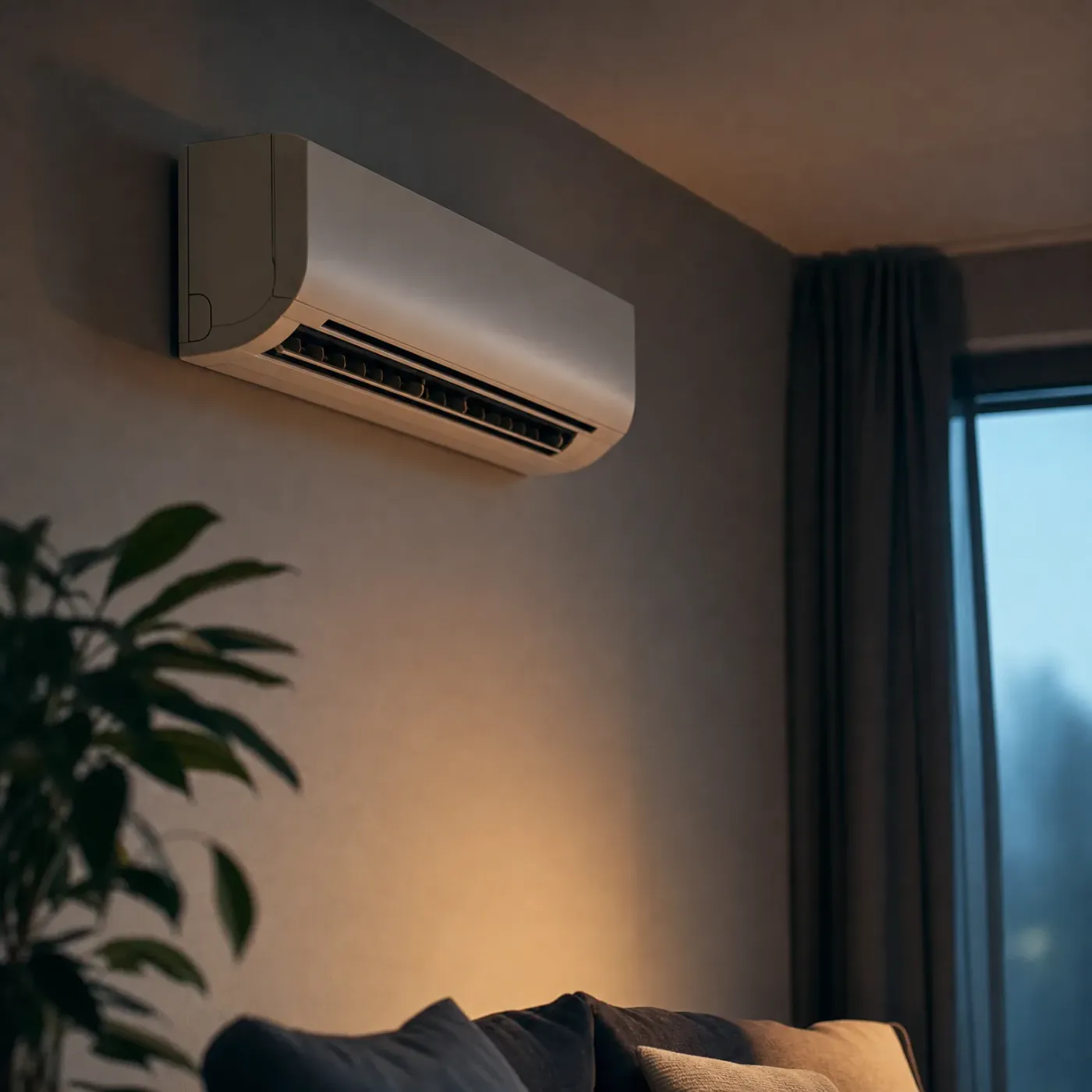
Air moves in and out of the unit without any resistance. The wall underneath stays the color it was painted. This is what a mini split looks like when the filter gets cleaned and the coil gets checked before the cold sets in.
Get your mini split to the right pro
A North Dakota winter asks a lot of a mini split, and the right setting depends on how cold it gets and what else is heating your house. Most homes here lean on gas and run the mini split as backup or for a few mild rooms, so the answer isn't the same for everyone. This page gets into how to set it, and what to have a contractor check before the deep cold hits, so you're not calling around to find out.
Connect with a proSet the mini split to heat mode and pick a steady temperature, something like 68, instead of bumping it up and down through the day. A heat pump works best left alone to hold a number. In a North Dakota winter, the outdoor unit has to pull heat out of air that might be well below zero, and below about 5 degrees most mini splits lose a lot of their capacity and start running close to nonstop just to hold the room. That's expected, not a sign anything's wrong. Since most homes here heat with gas, the mini split is usually working a room or two rather than the whole house, so let the gas furnace carry the load on the coldest days and let the mini split handle the milder stretches and the rooms it's assigned to. Watch the outdoor unit for a heavy coat of ice that doesn't clear on its own between defrost cycles. That's usually the first sign something needs a look before the cold really sets in.






You'll notice the outdoor unit running almost constantly on the coldest days, and the air coming out feels cool instead of warm. The room it serves never quite gets comfortable, so you turn the dial up, then up again, and the bill from your utility climbs for a result you can feel falling short. Some of that is just how a heat pump behaves once the temperature outside drops low enough. But if the filter is clogged or the outdoor coil is caked with frost and debris, the unit has even less to work with, and it strains harder for less heat. Left alone long enough, that strain is what shortens the life of the system.

Air moves in and out of the unit without any resistance. The wall underneath stays the color it was painted. This is what a mini split looks like when the filter gets cleaned and the coil gets checked before the cold sets in.

Dust has settled into the vents and a stain is spreading across the casing. That buildup means less air getting through, so the unit runs longer for less heat. A contractor who services it can tell you if the coil underneath is in the same shape.


Fill out one form instead of calling around for a mini split tune-up.
You only hire the pro if you want to.
Below about 5 degrees, most mini splits lose ground and lean harder on backup heat or the gas furnace tied into the same room.
That's not a setting problem. It's physics. A clean coil and a full charge of refrigerant are what let the unit keep pulling heat out of air that cold.
At 11.82 cents a kilowatt-hour, running your mini split a few extra hours on a mild day costs you little. It's the gas furnace that carries the real weight of a North Dakota winter, so let the mini split hold its temperature without worrying over every degree.
EIA-861 2025 statewide residential average
A mini split in a North Dakota winter isn't being asked to do the whole job. Most houses here lean on gas for the worst of it, and the mini split holds a room steady or backs up the furnace when the temperature allows. The setting part is simple: heat mode, a number you pick once, and the patience to leave it alone. Chasing the temperature up and down makes the compressor start and stop harder than it needs to, and once it's below about 5 degrees outside, no setting fixes what the cold itself is doing to the unit's ability to pull heat from the air. What setting can't fix, upkeep can. A clean filter and coil let the unit move air without strain, which is what keeps it pulling its share of heat on the days the furnace is carrying the rest. Skip that and you get a harder-working unit, stains building on the wall below it, and less heat for the same effort. None of this costs you much to run. Power here is cheap enough that holding 68 through a mild stretch barely shows up on the bill, so there's no reason to ration the mini split's hours the way you might with the furnace. The answer, plainly: pick a number, leave it there, and keep the unit maintained before the cold settles in. That's what lets it do its part all winter without extra strain on the compressor or extra load on the gas furnace next to it.


Matched to your mini split job
Skip calling around to set up a mini split tune-up.

