Down to -15°F and colder
Cold-climate mini splits keep producing heat well below zero, a range a standard heat pump can't handle without backup kicking in sooner.
 Find a pro near me
A local installer who puts in mini splits gets your project.
A cold-climate mini split in North Dakota is working against real winters, not mild ones. That's a fair question to ask about, especially when most homes here heat with gas and the mini split is doing a second job alongside a furnace that already runs most of the year.
Summer is where a mini split earns its keep here. The air isn't heavy the way it is further south, so you're not fighting humidity, just heat, and a mini split handles that well without running constantly. Winter is a different test. Cold-climate units are built to keep pulling heat from outside air well below zero, but how yours performs depends on your specific unit, how it was sized for your home, and how it was installed.
That last part matters more than people expect. A mini split sized wrong or installed without accounting for North Dakota winters will underperform no matter what the spec sheet says. Power here is cheap, so the economics look different than they do elsewhere, and whether that math works in your favor depends on your setup, not a general rule.
If you're trying to figure out whether yours is pulling its weight, or whether a new install makes sense for your house, that's a conversation worth having with someone who installs these units in this climate regularly. You won't have to explain North Dakota winters to them first, or track down a handful of installers yourself just to get a straight answer.
Getting matched with a contractor who installs cold-climate mini splits in your area means one person reaches out, already knowing what you're working with, instead of you making calls and repeating the same details to each one. What they find when they look at your situation determines what comes next.
A cold-climate mini split can be worth it in North Dakota, but mostly as backup, not as your main heat. These units are built to keep pulling heat out of outdoor air well below zero, using a compressor that ramps up instead of just switching on and off. That keeps them working on nights most regular heat pumps would give up on. But North Dakota winters still push past what any heat pump handles well on its own, which is why most homes here lean on gas furnaces to carry the coldest stretches. Where a mini split earns its keep is in the shoulder months and in rooms the furnace doesn't reach evenly, and in summer, when it cools without the furnace's ductwork having to do the work. If you're trying to even out temperatures room to room or add cooling without extending ducts, it's worth it. If you're hoping it replaces the furnace outright, it won't.


Cold-climate mini splits keep producing heat well below zero, a range a standard heat pump can't handle without backup kicking in sooner.
A mini split delivers heat straight into the room it's mounted in, so there's no duct run between it and the air you feel.
You've seen the specs claim a mini split can heat down to 15 or 20 below, and it sounds like a stretch when your furnace is the one actually keeping the house warm on those nights. It helps to know what's happening inside the outdoor unit when it's that cold, since that's what decides whether the thing is doing real work or just running.
A standard heat pump has a compressor that's either on or off. A cold-climate model has one that speeds up as the outdoor air gets colder and holds less heat, so it keeps pulling enough heat out of that air to be worth running. It also uses a larger coil and a more aggressive defrost cycle, so frost doesn't build up on the outdoor unit and choke off the airflow it needs. None of that makes the air outside warmer. It just lets the unit squeeze more heat out of air that's already near zero, which is the whole difference between a cold-climate unit and a standard one in a North Dakota winter.






You might notice the room with the mini split runs cold along the floor while the head keeps blowing, or it short cycles on and off every few minutes instead of holding steady. Maybe there's a hiss or a rattle from the outdoor unit when it's trying to work hardest, or frost that builds up on the coil and doesn't clear during defrost. Some households just notice the room never quite catches up, so someone ends up layering on blankets or running a space heater next to it. Left alone through enough cold snaps, a unit that's struggling can ice over or stop producing heat altogether, leaving that room with nothing but what the furnace can push through the vents.

A mini split like this is pulling its full rated heat out of cold outdoor air without a fight. The coil and filter are clear, so the compressor isn't working harder than it has to on a January night. That's what keeps the room steady while your furnace handles the rest of the house.

Dust and grime like this cut how much heat the unit can move into the room, right when a cold snap asks the most of it. The dark streaks are grime building on the coil itself, not just the filter. A unit running like this leans harder on your furnace than it should.


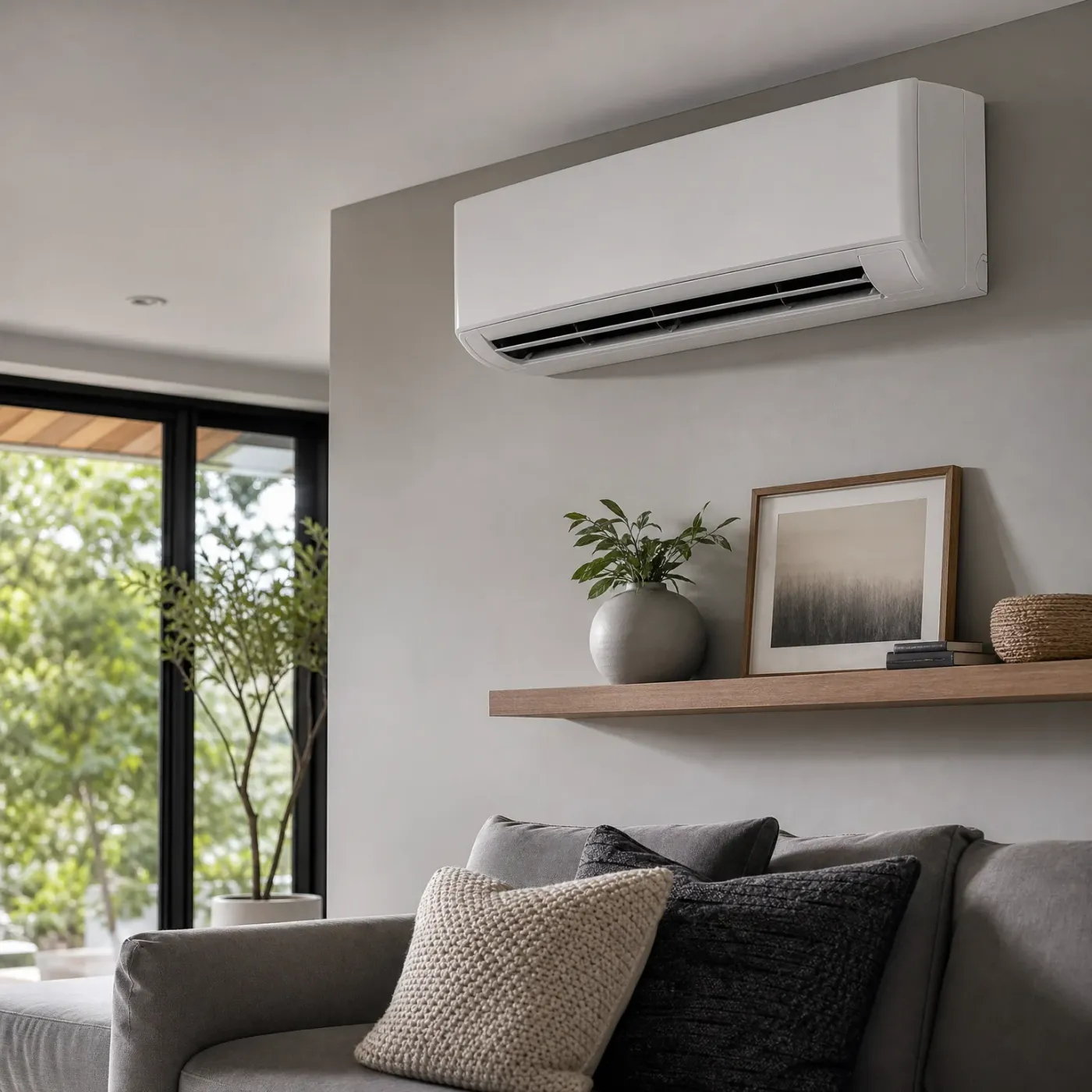
Skip searching for a mini split pro and answer a few questions instead.
Describe your mini split job, and a local pro who handles it gets in touch.
Sending the form costs nothing.
At 11.82 cents a kilowatt-hour, running your mini split to take the edge off a room costs you less here than in most states. That's part of why it pencils out as backup heat alongside your furnace instead of a swap for it.
EIA-861 2025 statewide residential average
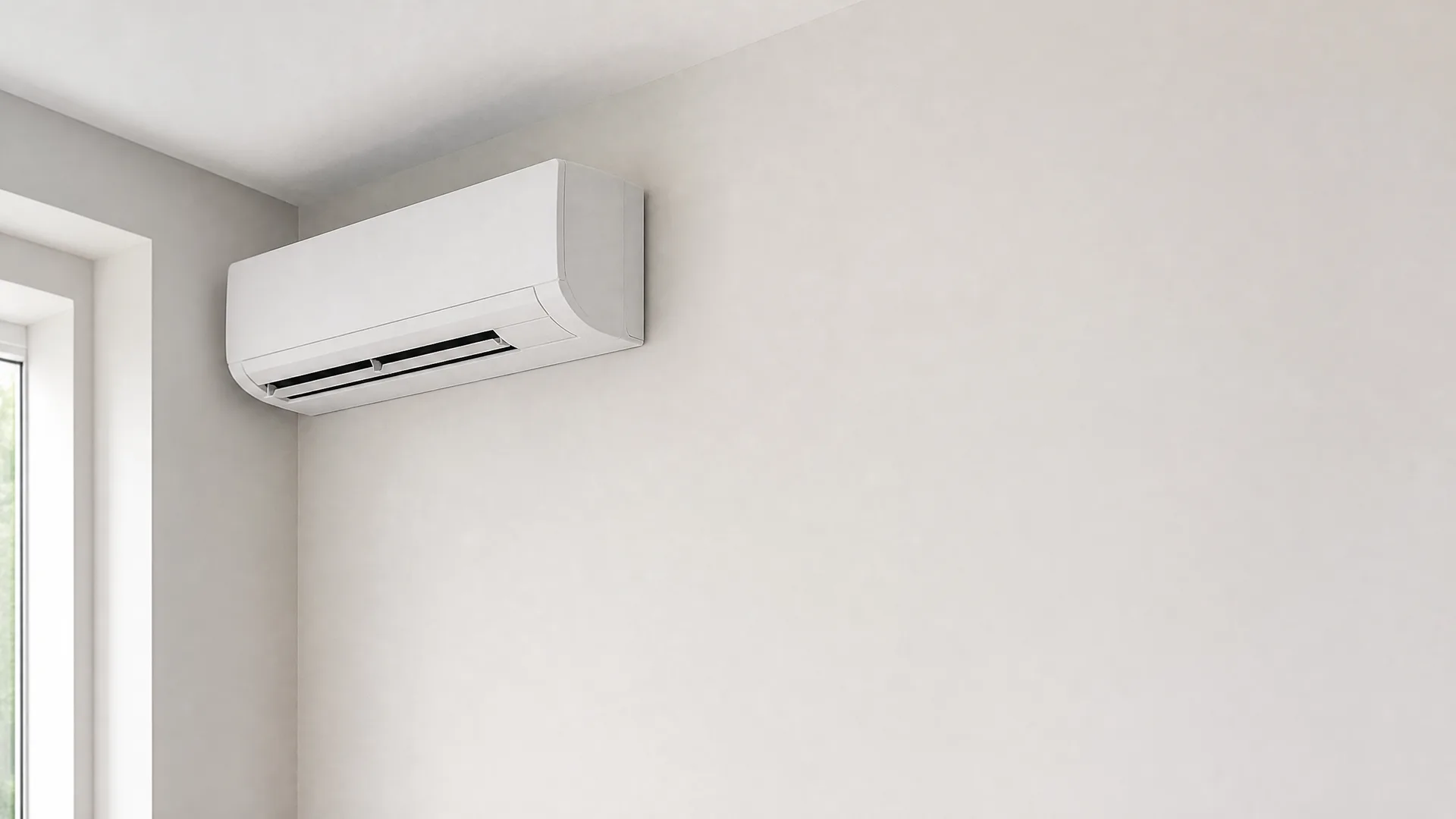
North Dakota summers don't bring the heavy, wet air that makes a room feel hotter than the thermometer says. A mini split handles that load easily, cooling the room it's mounted in fast and holding steady there. On most days this is the only cooling that room needs. You're not running a furnace blower just to push cool air through ducts it was never shaped to carry well.

Once the cold sets in, the mini split steps into a smaller role. Your furnace carries the house. The mini split takes the edge off whichever room it's in, especially one that runs cold anyway, a bonus room or a space over the garage. It can keep producing heat well below zero, but it's working alongside the furnace here, not instead of it.

Summer dew points around here average 53°F, so the air stays light even on a hot afternoon. A mini split doesn't have to wring much moisture out before the room feels right, so it reaches your set temperature and holds there without the compressor cycling hard to catch up on humidity. You'll notice the room cool fast and stay steady, not that clammy feel some places get even when the thermometer says the same number. Figure from NOAA climate normals.
NASA POWER T2MDEW county cells weighted by homes

A cold-climate mini split earns its keep here as backup, running alongside your furnace instead of replacing it. It carries the house well in summer on its own, and on winter's coldest nights it works with the furnace rather than against it. That's the honest answer for a state where gas heats most homes and power stays cheap enough to make the mini split worth running for comfort, not just savings.
If your mini split isn't holding a room the way it should, or you're weighing whether to add one, sorting that out usually means calling around, explaining the same problem more than once, and comparing quotes that don't line up. Matching with a contractor who already knows cold-climate systems skips that part. You answer a few questions about your home, and someone who services these units in North Dakota reaches out to you directly.


A pro who works on mini splits