Tell us about the job
Takes about a minute. No obligation.
Sizing a mini-split for a Richland County home requires a contractor to price the compressor capacity against a short, concentrated demand window rather than a long one. Homes in Richland County, ND run cooling about two months a year, from July through August. The compressor, the condenser fan, and the contactor all take their wear in that compressed stretch, so an undersized unit pushed to its ceiling in July shows the consequences of a bad load calculation before the season is out. A contractor quoting an install here works out the actual peak load the house places on the outdoor unit before recommending a head configuration, because an error in that number has nowhere to hide.
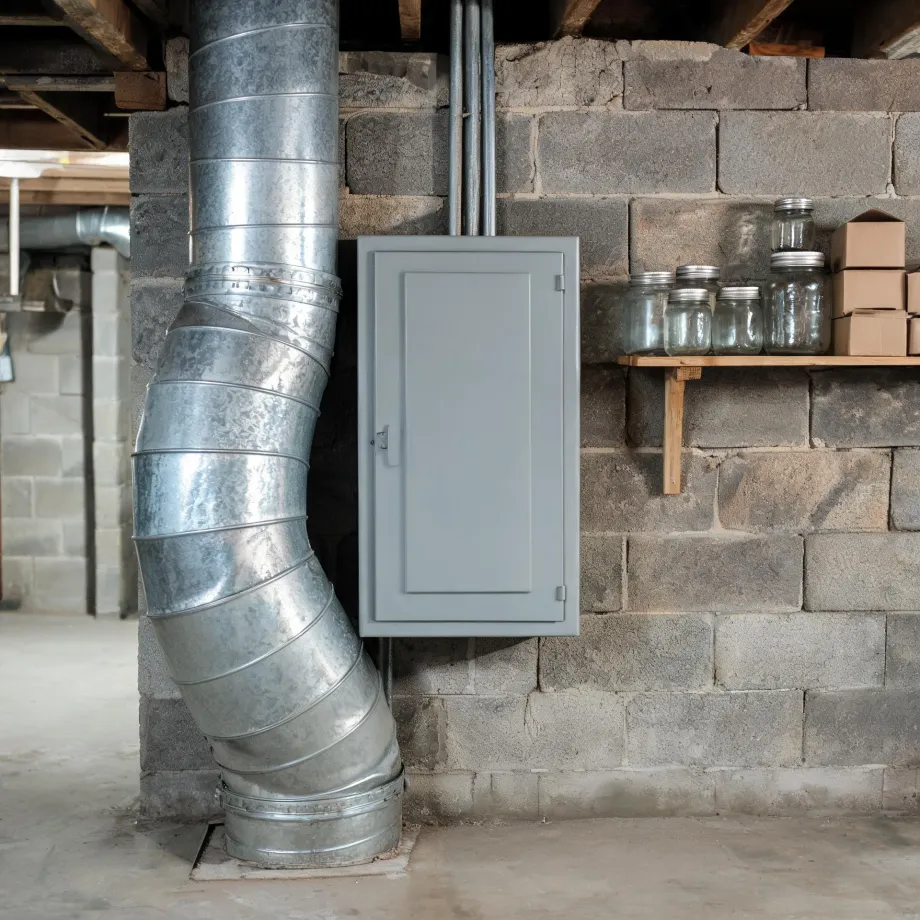
Electrical service is where a mini-split installation in Richland County gets decided, and the question a contractor has to answer is whether what is already in the house will carry the new load. Half the homes in Richland County, North Dakota were built in 1972 or earlier (2020-2024 ACS 5-year). Panels sized for what those houses originally ran are often undersized for what a modern inverter-driven unit draws, and a contractor who does not check that first is pricing a job without knowing its full scope. The ductwork in a house like this is a separate question, because mini-splits bypass it entirely, which means the electrical panel moves to the front of the assessment.
The Parts of a Mini-split System and What Each One Does
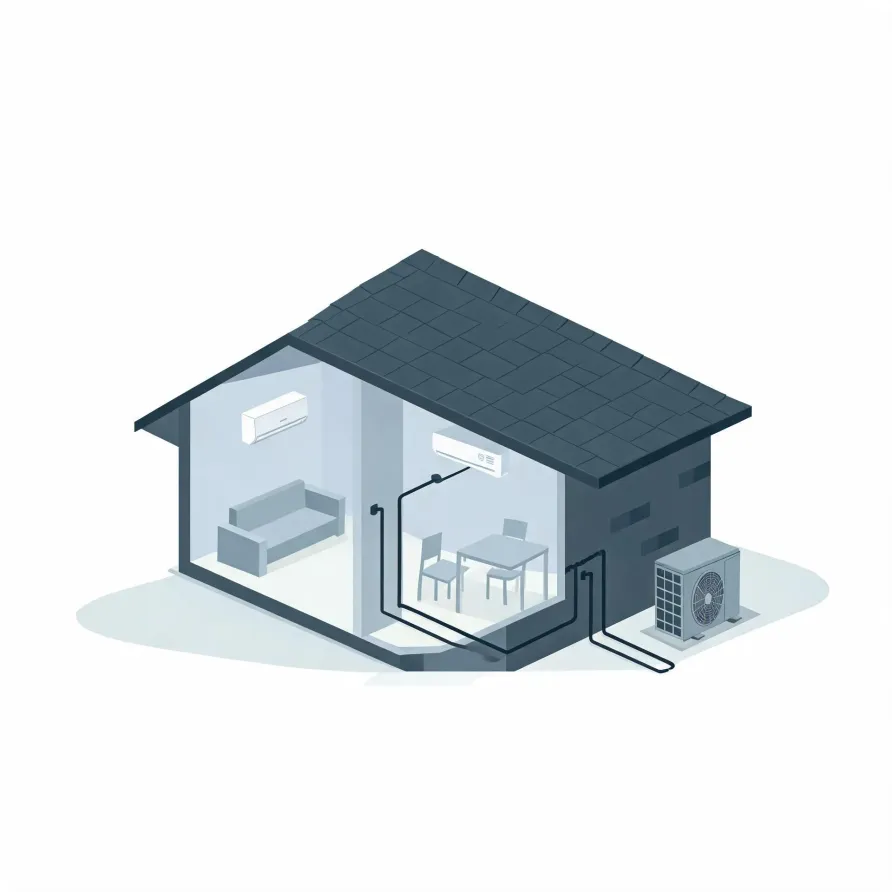
The indoor air handler mounts high on a wall inside the room and is the piece a homeowner sees every day. It draws room air across a coil, conditions it, and pushes it back into the space. The outdoor unit sits on a pad or brackets at the exterior of the house and holds the compressor and the second coil.
A set of refrigerant lines runs through a small penetration in the wall to connect the two units, carrying the working fluid between them. A condensate drain line also exits the indoor unit, routing any moisture collected during operation to the outside or to a drain.
The drawing shows the general layout of a mini-split system, and a licensed contractor determines what applies to this particular house.
Find a contractor in Richland CountyRichland County, by the record
197 severe weather events were recorded in Richland County, North Dakota between 2015 and 2024.
NOAA National Centers for Environmental Information, Storm Events Database, bulk CSV export, events 2015-01-01 through 2024-12-31.Half the homes in Richland County, North Dakota were built in 1972 or earlier (2020-2024 ACS 5-year).
U.S. Census Bureau, 2020-2024 American Community Survey 5-Year EstimatesRichland County, North Dakota holds 7,530 housing units (2020-2024 ACS 5-year).
U.S. Census Bureau, 2020-2024 American Community Survey 5-Year EstimatesOwners occupy 68.1% of the occupied homes in Richland County, North Dakota (2020-2024 ACS 5-year).
U.S. Census Bureau, 2020-2024 American Community Survey 5-Year EstimatesInstallation Rules That Apply in Richland County, North Dakota1 sourced rules and standards
Licensing and Legal Requirements in Richland County, North Dakota
North Dakota requires a contractor licence once the cost, value or price of a job exceeds four thousand dollars, and an unlicensed contractor may not bring a claim or a lawsuit in a North Dakota court over the work.
Severe Weather Events in Richland County
Richland County's climate puts real demands on heating and cooling equipment year after year. A mini-split sized and installed for local conditions handles those demands better than one spec'd for somewhere else.
197 severe weather events, 2015–2024. Source: NOAA National Centers for Environmental Information, Storm Events Database.