Tell us about the job
Takes about a minute. No obligation.
Compressor faults found on the first call of summer in Stark County rarely trace back to overwork. Homes in Stark County, ND run cooling about two months a year, from July through August. A mini-split that sat dormant since late August can develop refrigerant seepage at fittings, contactor corrosion, and capacitor degradation without running a single cycle. A contractor diagnosing a failed startup checks those components before assuming load damage, because the idle period is where the failure typically started.
Refrigerant line sets and wall penetrations in houses this old were added after the fact, fitted around whatever framing and insulation were already there. Half the homes in Stark County, North Dakota were built in 1986 or earlier (2020-2024 ACS 5-year). A fault code on the indoor head tells a contractor where to look, but the condition of the line set, the quality of the original penetration seal, and whether the refrigerant charge has been right since the retrofit was done are what actually decide the repair. Those are physical findings, not panel readings.
The Parts of a Mini-split a Contractor Checks First
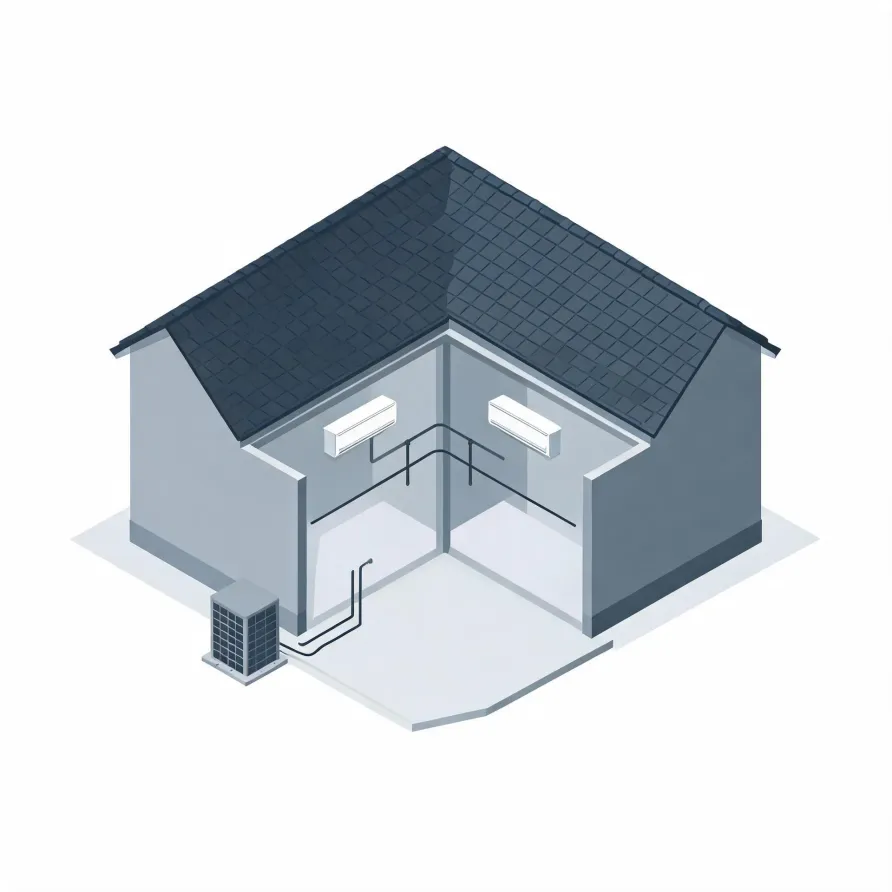
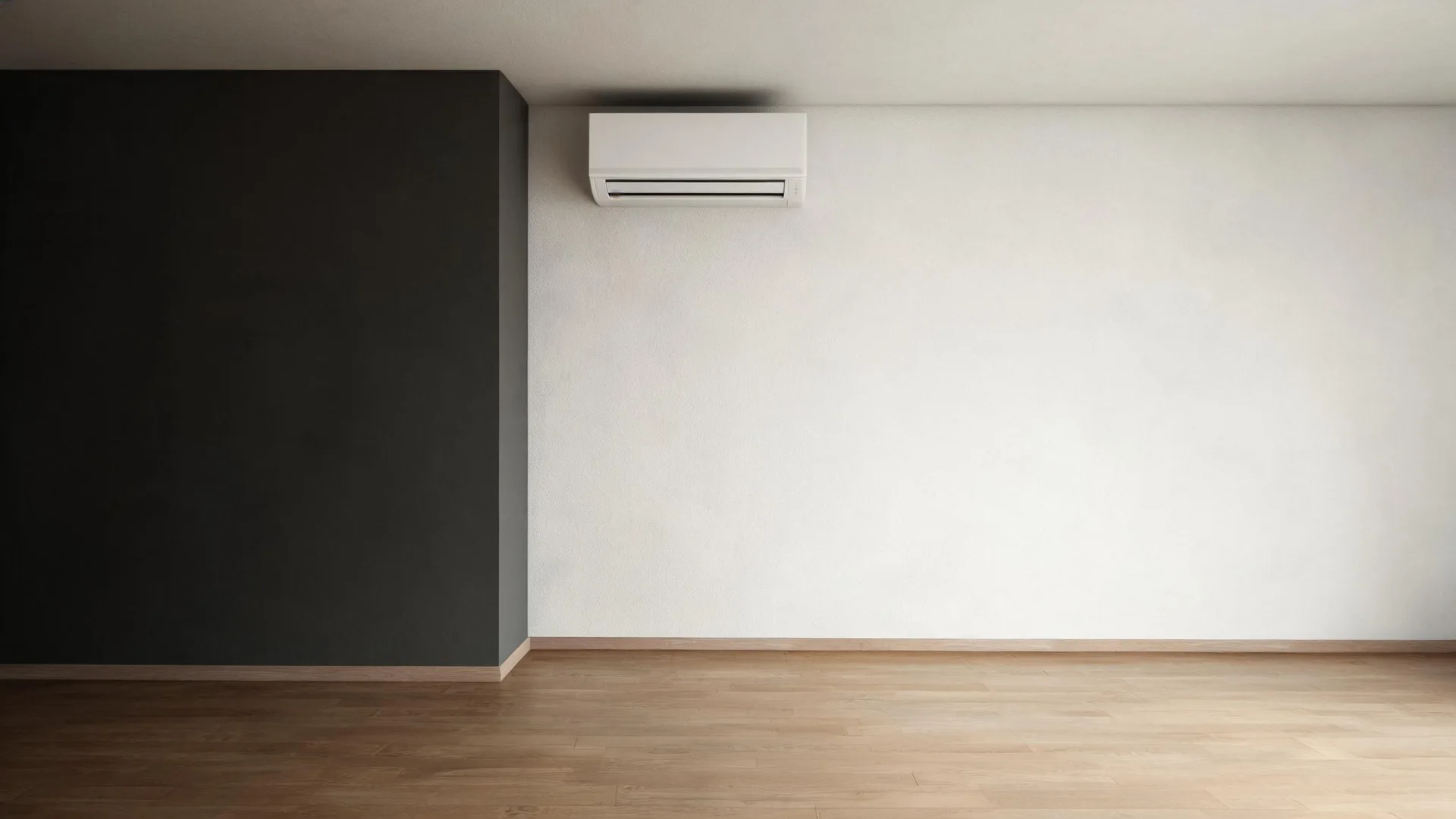
The indoor air handler mounts high on an interior wall and is the piece most homeowners notice first. It pulls room air across a coil and pushes conditioned air back out. When this unit is the source of a problem, the signs show up as weak airflow, ice on the coil, or air that never reaches the set temperature.
The outdoor condenser sits on a pad or bracket outside the house and carries the compressor, which is where a contractor focuses when the system runs but fails to move heat properly. The refrigerant lines and the condensate drain run between the two units, and both are points a technician checks when the indoor unit leaks or the system short-cycles.
The drawing shows a typical layout, and a licensed contractor determines what applies to your specific house and system.
Find a contractor in Stark CountyStark County by the numbers
185 severe weather events were recorded in Stark County, North Dakota between 2015 and 2024.
NOAA National Centers for Environmental Information, Storm Events Database, bulk CSV export, events 2015-01-01 through 2024-12-31.Half the homes in Stark County, North Dakota were built in 1986 or earlier (2020-2024 ACS 5-year).
U.S. Census Bureau, 2020-2024 American Community Survey 5-Year EstimatesStark County, North Dakota holds 15,514 housing units (2020-2024 ACS 5-year).
U.S. Census Bureau, 2020-2024 American Community Survey 5-Year EstimatesOwners occupy 66.8% of the occupied homes in Stark County, North Dakota (2020-2024 ACS 5-year).
U.S. Census Bureau, 2020-2024 American Community Survey 5-Year EstimatesCodes & Standards Governing Mini-Split Repair in Stark County, North Dakota1 sourced rules and standards
Licensing Rules for HVAC Repair in Stark County, North Dakota
North Dakota requires a contractor licence once the cost, value or price of a job exceeds four thousand dollars, and an unlicensed contractor may not bring a claim or a lawsuit in a North Dakota court over the work.
Severe Weather Events in Stark County by Year
Extreme weather puts real stress on mini-split systems, and the repair demand that follows is shaped by what this county actually sees. That makes local weather history a practical backdrop for understanding why heating and cooling equipment here works as hard as it does.
185 severe weather events, 2015–2024. Source: NOAA National Centers for Environmental Information, Storm Events Database.