Running clean
This is what it looks like doing its job, pulling in air and moving it through without a fight. The coil stays clear, the fan moves full air, and the compressor isn't working harder than it has to for the heat you're getting.

Winters here get well below zero, and most houses are already set up with gas heat. If you've got a mini split too, you're probably wondering if it's actually built to carry you through a North Dakota winter or if it's going to struggle, or shut down, once the cold really sets in.
A mini split pulls heat from the outside air, and the colder that air gets, the less heat there is to pull. Most units keep working down to around 5 degrees below zero, some lower, but their output drops off well before that point. On the coldest nights here, the unit is still running but it's not putting out enough heat to keep up on its own. That's where the gas furnace most homes already have comes in, picking up the load the mini split can't carry. Letting both run through winter, the mini split doing the easier days and the furnace covering the hardest stretches, is normal and not a sign anything is wrong with the mini split.
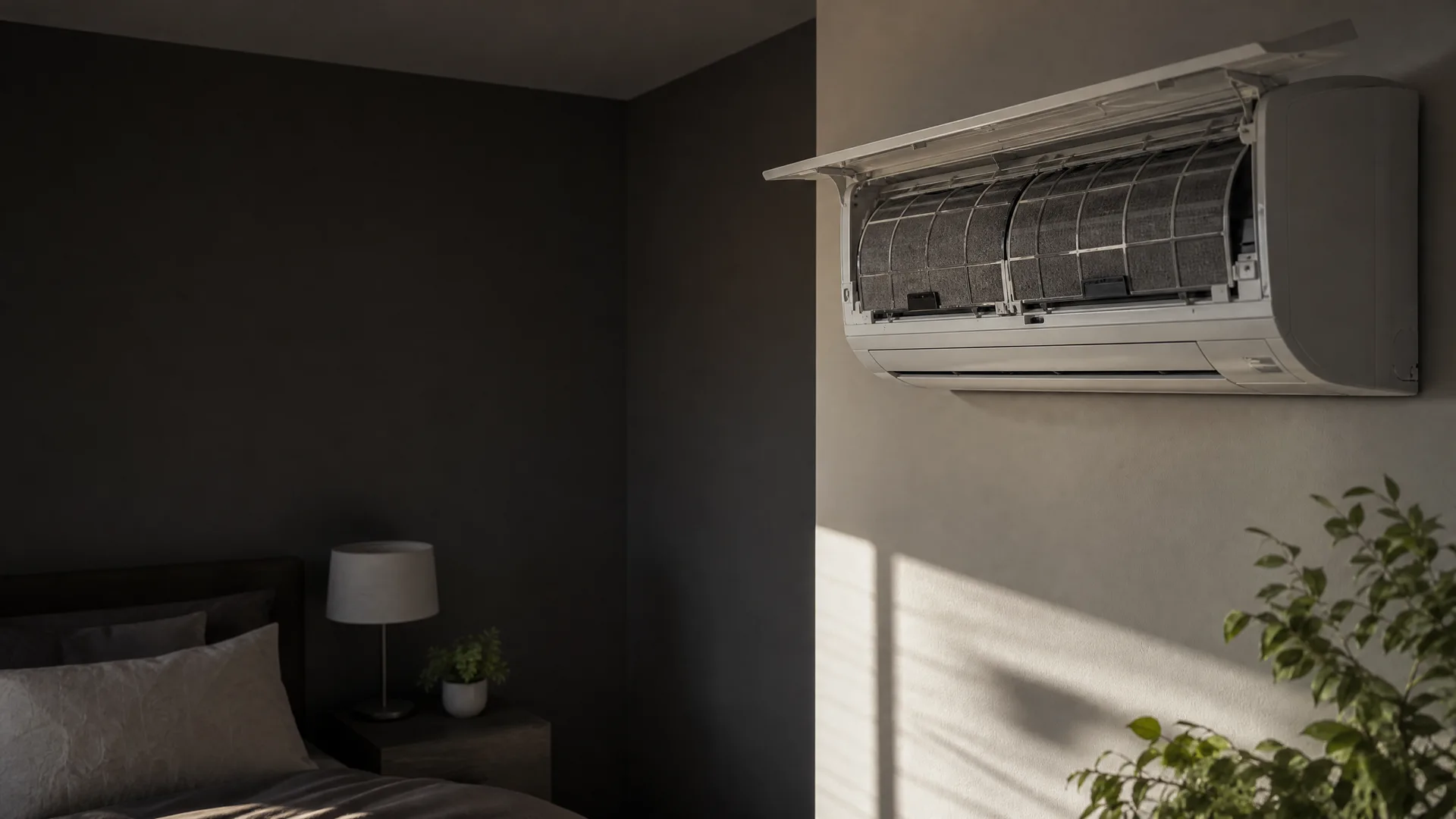
The cover is already up when you crouch down to look. Light's coming in low through the blinds, that flat spring sun you get once the snow's finally off the ground, and the filter screen is grey with a winter's worth of dust packed into it. You run gas heat through January and February, so the mini split sat idle most of that stretch, just the fan kicking on now and then. You never thought to check it. Now you're holding the screen up to the window and you can't see through the mesh at all. You set it in the sink to run water through it, thinking about how long it's been since you opened this thing up, and whether the rest of the unit looks the same underneath.

A mini split pulls heat out of outside air and moves it inside, even when that air is cold. It does this with a compressor and a reversing valve, the same parts that run it in reverse come summer. Below a certain outdoor temperature, the unit can't pull enough heat to keep up, so it leans harder on its backup strip heat or just loses ground to the room. Where that line sits depends on the specific model, and it's lower than most people guess. The defrost cycle is the other piece: frost builds on the outdoor coil in cold, damp air, and the unit periodically reverses itself to melt it off before it chokes the airflow.
None of that works right if the outdoor coil is caked with ice that won't clear, or the indoor filter is choked with dust and the unit is starved for airflow on the warm side too. A contractor who services mini splits through a North Dakota winter knows which models hold up down to real cold and which ones start struggling well above zero, because they've opened up the ones that failed. Finding that out yourself means calls to a handful of installers, explaining your model and your gas setup over again each time, then sorting through quotes that don't agree with each other.

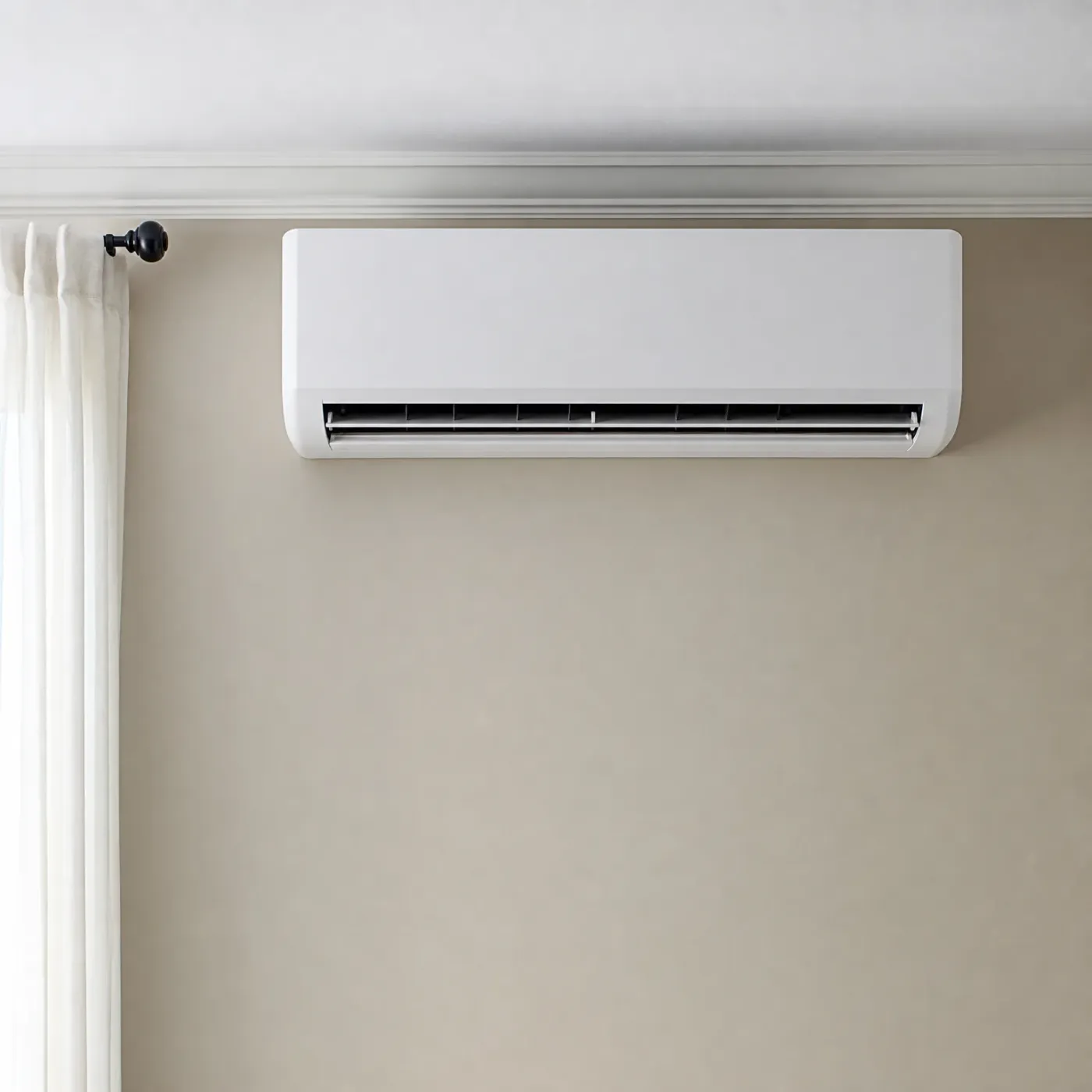
This is what it looks like doing its job, pulling in air and moving it through without a fight. The coil stays clear, the fan moves full air, and the compressor isn't working harder than it has to for the heat you're getting.
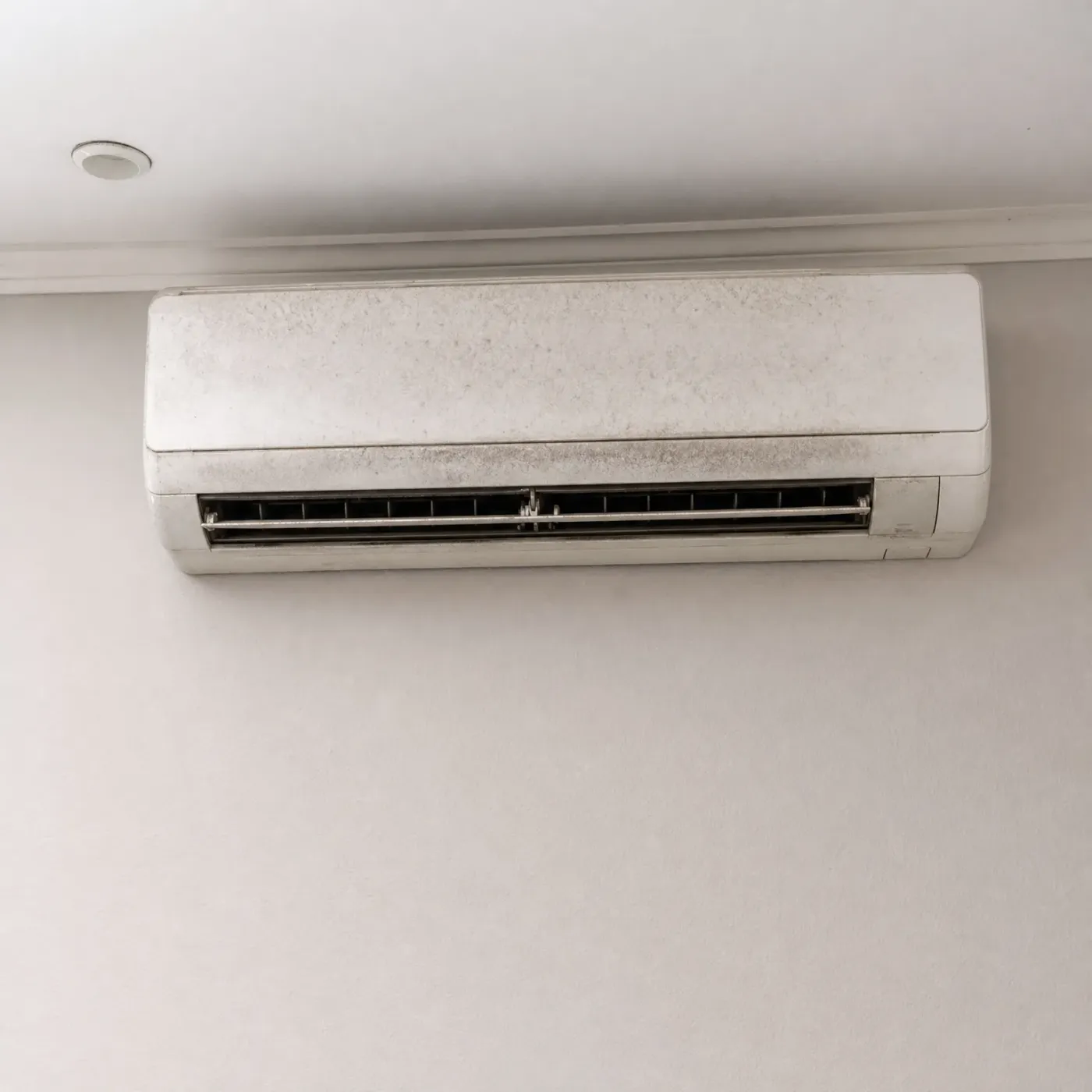
Dust like this on the casing usually means the same buildup is on the coil you can't see. Airflow drops, the compressor runs longer for less heat, and a unit left like this through a North Dakota winter is working against itself the whole time.




A licensed local pro takes the request for your mini split tune-up.
Asking costs nothing, and the choice to hire stays yours.
A mini split's outdoor coil is pulling heat out of air that might be sitting at ten below. There's less heat in that air to begin with, so the compressor has to run longer to move the same amount into your house. Frost forms on the coil in that kind of cold, and the unit runs a defrost cycle to clear it, which pulls warm air back outdoors for a few minutes at a time. None of that means it's failing. It's just the physics of low temperature heat, and it's why most manufacturers list a low outdoor temperature where the unit's output starts dropping off.
A mini split working through a North Dakota winter needs its outdoor coil and filters clear more than one running in a mild climate ever would. A coil crusted with frost or coated in dust loses capacity before it loses efficiency, meaning it draws the same power for less heat. Someone who services these units through a full Dakota winter and summer knows which models struggle below a certain temperature and which filters clog fastest with the dust these houses collect. That's worth more than another call to explain your system from scratch, especially with your gas furnace carrying part of the load already.


Every mini split icing up in cold weather does the same thing to clear it. The system reverses itself for a few minutes, sending warm refrigerant out to the coil instead of in, and melts the frost off before switching back. You'll notice the outdoor fan go quiet and some steam come off the unit. That's the coil shedding what it picked up, not a malfunction. Once it's clear, the unit goes back to pulling heat like normal. Below a certain temperature, though, there isn't enough heat left in the air for the compressor alone to keep up, and that's when backup heat takes over, whether that's a strip heater built into the unit or your gas furnace. The control board or thermostat makes that call on its own, watching outdoor temperature and the coil itself. A coil that's dirty going into winter spends more time defrosting and less time actually heating, so what's on that coil before the cold hits matters more than people think. Keep the indoor head set where you want it and leave it there. Chasing a higher number just means the compressor runs flat out trying to close a gap it can't close fast.


Cold outside air moves across the outdoor coil and gives up its heat.
The compressor pulls refrigerant vapor and raises its pressure and temperature.
Hot refrigerant moves inside and releases heat through the indoor coil.
The indoor fan pushes that heated air out into the room.


At eleven and a half cents a kilowatt-hour, running a mini split hard on a cold night here won't wreck your bill the way it might somewhere with pricier power. That's good reason to let it carry more of the load instead of leaning on gas alone, as long as it's clean enough to actually pull its weight.
EIA-861 2025 statewide residential average
A mini split can run all winter in North Dakota, down to whatever cutoff its compressor is built for, and gas can take over below that. That's the straight answer. Whether it's worth running that way comes down to whether the coil and filters are clean enough for the compressor to pull its weight on the coldest nights instead of just burning power for less heat. A local contractor who services mini splits through a full Dakota winter has already seen what frost buildup and a dirty coil do to units like yours, and knows what to check before the next cold snap hits. You'd be working with one contractor, not fielding calls from three or four companies trying to win the job. Someone licensed, local, and familiar with how these units actually perform at ten below, not just on a mild fall afternoon. That's the part worth having someone else handle. The rest, when to let the mini split carry the load and when to let gas take it, you already have a handle on.





Your request goes to one pro, not a list of companies.
No fee to send it, and nothing to sign.