
Running clean
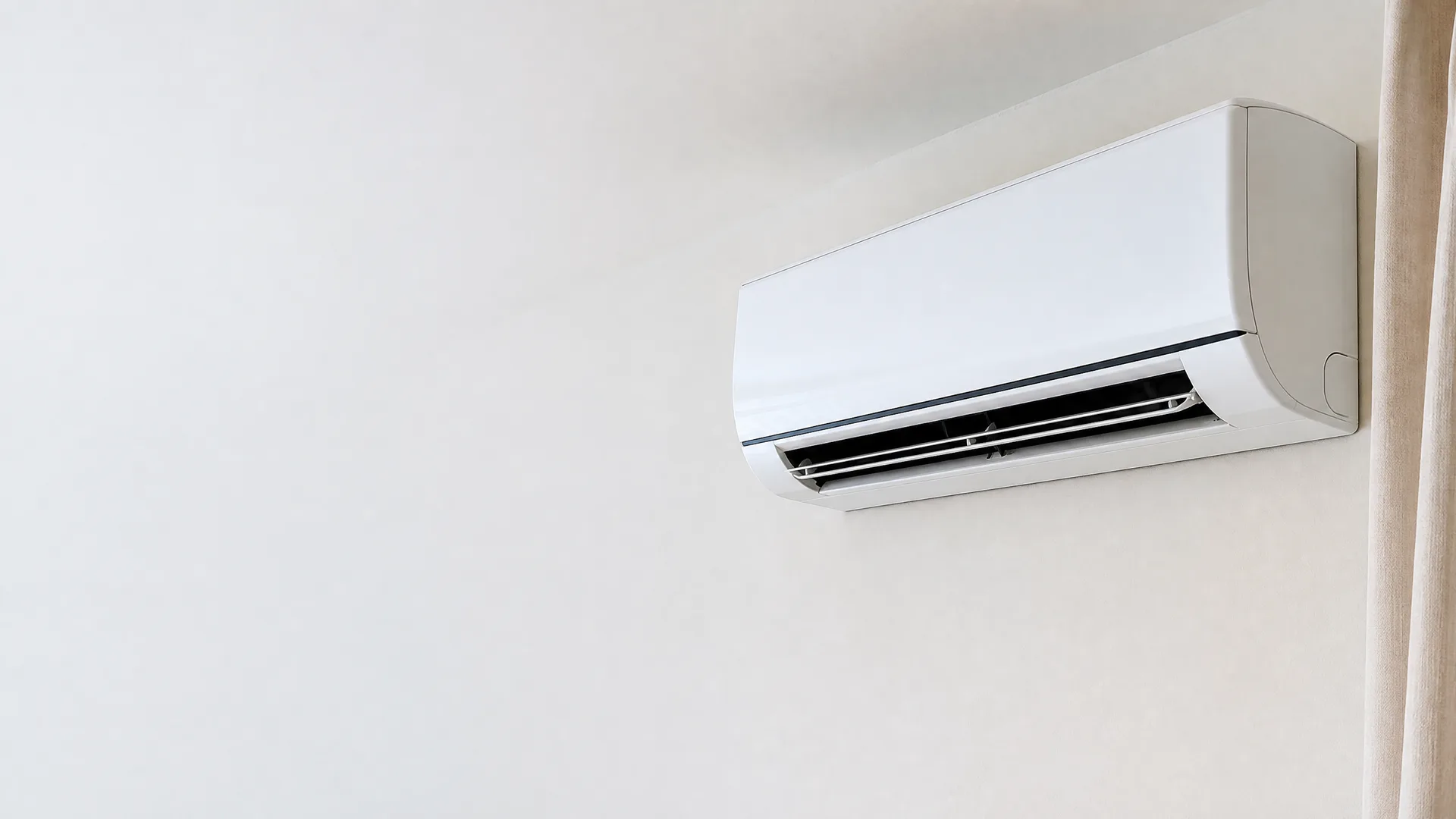
This is what a mini split looks like when defrost is doing its job. The unit cycles out of it on its own and goes back to heating the room, and nothing about the wall or the vents gives you a reason to look twice.

Hand off the mini split problem
Your mini split shows "defrost" on a cold North Dakota morning and stops blowing warm air. That's it running a cycle to melt ice off the outdoor coil, not a breakdown, but if it sits in defrost too long or keeps cycling back into it, something's wrong. This page covers what the mode does and when to stop waiting it out and get someone qualified to look at it. Skip the search for who's any good and who answers the phone. Send the form and let a contractor get back to you.
Hand it offDefrost mode is your mini split melting ice off the outdoor unit's coil. Out in North Dakota cold, that coil picks up frost the same way a car windshield does, and once ice builds up on it, the unit can't pull heat from the outside air anymore. So the system pauses, reverses briefly, runs warm refrigerant through that outdoor coil to melt the ice, and the indoor fan usually slows or stops so it isn't blowing cold air at you. A few minutes later it switches back to heating. One cycle, especially on a morning after snow or heavy frost, is normal. What isn't normal is the unit sitting in defrost for a long stretch, going into it every few minutes, or coming out still blowing cool air. That points to a stuck sensor, low refrigerant, or a drainage problem icing things up faster than the unit can clear it.



A summer dew point averaging 53°F across June, July and August, figured over where people actually live in North Dakota, is why the air here feels dry even on a hot day. That matters for defrost mode because defrost is a cold-weather thing, tied to frost forming on the outdoor coil. Low humidity in summer means the coil isn't fighting moisture then, so if you see "defrost" on the display in July, that's not normal and it's worth a look. The pattern you should expect it from is a cold, damp morning in winter, not a muggy afternoon. Source: regional climate averages for North Dakota.
NASA POWER T2MDEW county cells weighted by homes

Outside, the coil pulls heat out of the cold air even when it's well below freezing. Moisture in that air lands on the coil's metal fins and turns to frost, same as it collects on a vehicle parked outside overnight. Once frost builds past a thin layer, it blocks airflow through the fins and the unit can't move heat the way it should. Defrost clears that layer so the coil can keep working. The reversing valve flips the cycle for those few minutes, which is why warm air stops at the indoor unit until it's done.
A mini split decides when to run defrost using a temperature sensor clamped to the outdoor coil. When that sensor reads wrong, the unit can start guessing. It might skip defrost while frost keeps building, or it might trigger defrost when the coil isn't iced at all. Either way you'll notice the pattern before you'd ever see the sensor itself: short cycles turning long, or defrost firing off every few minutes through a North Dakota night. A contractor checks that sensor's reading against the coil's actual temperature to know if it's the part at fault.

If your mini split gets stuck in defrost on a January night, the room it heats starts losing ground fast. No warm air is coming out while the outdoor fan sits still and the unit works on that coil. In a North Dakota cold snap, that's not a gap you want to wait out until morning.
Once you send in what's happening, you're done hunting for who can look at it. No calling around to ask who works on mini splits, no describing the same ice buildup to three different shops, no sitting on hold comparing quotes while the room keeps cooling. That part of it is off your plate.





Fill out one short form instead of calling around.
It costs nothing to send, and you don't have to hire anyone.

It's late afternoon in January, the light already going gray outside the window. You're at the desk in the home office, mini split humming on the wall above you, and you notice the wall underneath it is wet. A thin streak runs down from the unit toward the baseboard, dark against the paint. You grab a towel from the hall bathroom and fold it along the floor to catch the drip. The unit's still running, still showing that defrost readout you've seen before, but it's been a while since it switched back to heat. Your coffee's gone cold on the desk. The room feels a few degrees off from where you set the thermostat, and the towel's already soaked through once.
You're sitting in the room it heats and you notice the air coming out has gone cold, or stopped altogether, and the outdoor unit has gone quiet. Check the thermostat and it still says heat, still says the temperature you set. That's the stuck part. A normal defrost cycle ends on its own in a few minutes and the warm air comes back. If it doesn't, the room keeps losing heat with nothing making up for it, and on a North Dakota night in January that room can get cold fast. Look at the outdoor unit too. Thick ice building up on the coil instead of melting off, or ice sitting on the ground underneath where it's dripped and refrozen, means the cycle isn't doing its job.

This is what a mini split looks like when defrost is doing its job. The unit cycles out of it on its own and goes back to heating the room, and nothing about the wall or the vents gives you a reason to look twice.

Buildup like this on the vents and casing makes the coil work harder than it should, in a state where it's already fighting frost half the year. A unit this neglected is more likely to get stuck in defrost instead of cycling out of it.


Defrost is the reversing valve working backward for a few minutes. Normally it sends hot refrigerant into the room and cold refrigerant outside. During defrost it flips that around, so hot gas runs through the outdoor coil instead, melting the frost off the fins. That's why the indoor fan usually cuts out during defrost. It's not warming your room right then, so running the fan would just blow cold air at you. The outdoor fan stops too, because pushing more cold air across a coil you're trying to heat up slows the whole process down. A thermistor mounted on the outdoor coil is what tells the control board a cycle is needed in the first place. It reads the coil's temperature directly, and once that temperature climbs back past a set point, the board switches the valve back and the unit goes back to heating your room. There's also a timer in the board that caps how long a cycle can run. If the coil hasn't warmed up by then, the system reverts to heating anyway rather than staying stuck.


At 11.82 cents a kilowatt-hour, running your mini split through a bad stretch of defrost cycling costs you less here than it would almost anywhere else. That's a reason to get a stuck cycle looked at rather than live with it, not a reason to let it run.
EIA-861 2025 statewide residential average
Defrost mode by itself isn't the problem. Your mini split is built to run it, melt the frost off the outdoor coil, and switch back to heat on its own, usually inside ten minutes. What tells you something is wrong is the pattern: a cycle that drags on, one that keeps coming back every hour or so, or a unit that stays stuck and never gets back to heating. That's the coil or a sensor, and it won't sort itself out.
On a cold night here, a stuck cycle means the room you're sitting in loses heat while the outdoor fan sits still and does nothing. That's worth acting on regardless of what it's doing to your bill, since power here is cheap enough that cost was never the real reason to call someone.
The part that actually takes time isn't the repair, it's everything before it. Finding a contractor who knows mini splits, not just furnaces and central air, calling around to see who can look at it, and explaining the same symptoms over again to each one. Sending one form here skips that part. Once it's in, lining up someone to come look at your unit stops being something you have to manage. You still need the repair done, but you're done hunting for who's going to do it.
Explain the job once and skip repeating it on every call.