Running clean
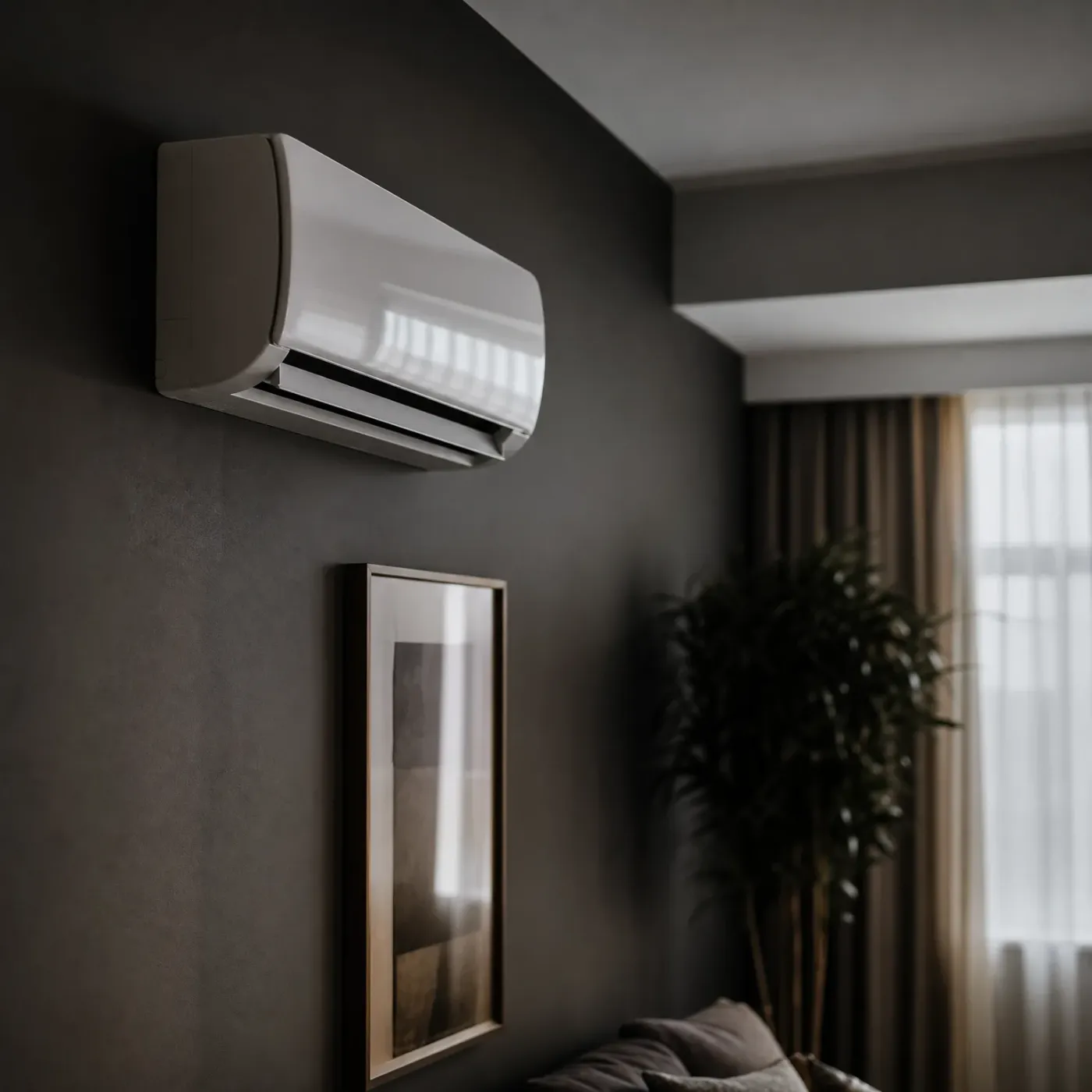
This is what a mini split looks like when the coil and drain are clear. Air moves out through the vane without resistance, no frost on the lines, no water finding its way to the floor below the unit.
Hand off the search today
A mini split dripping water in the middle of a North Dakota winter seems backward, but it happens, usually from a clogged condensate line or ice building up on the indoor coil. This page walks through why it happens in cold weather and what's behind it in your unit. Once you send the form, finding someone to look at it is off your plate.
Send it todayWater dripping from your indoor unit in the middle of a North Dakota winter usually means the condensate line is clogged or ice has built up on the indoor coil. Here's why it happens in the cold. A mini split pulls heat out of outdoor air even when that air is well below freezing, and the colder it gets, the harder the outdoor unit has to work to find heat. That strain can frost the outdoor coil or cause the system to run longer defrost cycles than it would in a mild Minneapolis winter, and the extra moisture from those cycles has to drain somewhere. If the condensate line is blocked or frozen itself, that water backs up and shows up as a drip or a puddle under the indoor unit instead of draining outside. A line that drains fine in July can freeze solid in January, so the leak often starts the first hard cold snap of the season.

You're at the desk in the home office that afternoon, the one with the mini split head mounted above the window. It's warm out, that dry North Dakota summer heat without the heaviness, and the unit has been running steady since lunch. You notice the wall first, a dark streak running down from under the indoor unit, soaking into the paint. Then you see the towel already on the floor, damp at the edges. You pull it back and more water beads along the bottom seam of the unit. The office smells faintly musty. You stand there looking at the wall, trying to remember the last time anyone checked this thing.

This is what a mini split looks like when the coil and drain are clear. Air moves out through the vane without resistance, no frost on the lines, no water finding its way to the floor below the unit.

Dust and grime like this build up slowly on the housing and the coil behind it. That buildup is what slows a defrost cycle down, and a slow defrost is what sends melted ice into the drain pan instead of out the condensate line.
You've watched it happen a few times now. The unit runs fine, then every so often it dumps water right when it seems to pause and click. It's not random, and it's not every time it runs. You want to know what's actually happening inside the unit during that stretch, because if you can tell your contractor exactly when it drips, they'll know faster what's wrong with it.
In a North Dakota winter, the outdoor coil picks up frost as it pulls heat from the cold air. Every so often the system reverses itself for a few minutes to melt that frost off, which is the defrost cycle. That's the part that clicks and pauses. The melted frost turns into water that has to run down through the base pan and out the drain. If that drain is blocked by ice or debris, or if the base pan heater isn't keeping the path open, the water backs up and finds another way out, often through the indoor unit. That's why the leak lines up with defrost instead of showing up any other time the system runs.

Summer air here isn't heavy. Dew points in North Dakota average 53°F across June, July and August, figures from NOAA's climate data for the state. That's dry air by most standards, and it matters for your mini split because a dry summer means less condensate running off the indoor coil and down the drain line all season. Less water moving through that line means less chance to flush out the dust and lint that build up inside it. So when winter comes and the unit switches to heating, that same line is more likely to be sitting partly clogged, with nowhere for the defrost water to go but out. If yours is already leaking, send in the details and a local contractor who works on these units every winter can take it from there.
NASA POWER T2MDEW county cells weighted by homes
A mini split that drips water in January isn't something to watch for a few more cold snaps and see if it clears up. Once ice builds on the outdoor coil and the drain line can't keep up during defrost, that water finds the nearest way down, and in your house that might mean the wall or the floor under the head, not just a wet spot on the unit itself. Waiting through another deep freeze gives it more chances to do that. What it needs is someone who works on these systems through a North Dakota winter regularly and knows whether a given unit is dealing with a cracked drain pan, a line that's frozen shut, or a coil that's icing because something upstream isn't right. That's a different job than troubleshooting a furnace, and it's worth having someone who already knows mini splits handle it rather than guessing room by room. Send the request once and it goes to one local contractor built for this, not a pile of callbacks to sort through while the leak keeps finding new places to go.
The outdoor coil runs colder than the air around it whenever the system calls for heat, so moisture in that outside air lands on the coil as frost before it ever becomes water.
That frost only turns to water on purpose, during defrost, and it only becomes a problem in your house if the line meant to carry it away is blocked or frozen shut.


The unit keeps heating, so you let the water keep finding its way to the floor or the windowsill below. Each defrost cycle adds a little more, and that water doesn't stay put. It can soak into drywall, warp a sill, or run down inside the wall if the line it's following goes that way. A clogged drain or a coil icing over doesn't clear itself once outdoor temps stay low. The leak is a sign the system is working harder than it should to keep the house warm, and that doesn't change until someone opens it up and finds where the water is actually coming from.
A local contractor who works on mini splits all winter has seen this exact problem on other systems in other homes near you. They know whether it's the condensate line, a frozen coil, or something further back causing it. Send the request and the search for the right person is off your plate. One contractor gets matched to the job, licensed and local, so you're not fielding calls from three different companies while you're trying to figure out where the water's coming from. The leak gets looked at by someone who already knows what usually fails in this cold.
Power here runs 11.82 cents a kilowatt-hour statewide, and with electricity that cheap, most homeowners don't think twice about running the mini split hard through a cold snap. That's exactly when a clogged drain or a coil icing over turns into a bigger repair instead of a quick fix.
EIA-861 2025 statewide residential average


A mini split leaking in a North Dakota winter almost always comes down to one of two things: a condensate line that's clogged, or ice on the indoor coil that's melting faster than the line can carry it away. Both trace back to the defrost cycle. The outdoor coil frosts over as it pulls heat from cold air, and when the system clears that frost, the water it produces needs somewhere to go. If the line is blocked, or if dust and grime on the coil or vanes have slowed drainage, that water backs up and finds its way out through the indoor unit instead of down the drain.
Left alone, it doesn't stay a small problem. Each defrost adds a little more water, and over a season that adds up to soaked drywall, a warped windowsill, or water running down inside the wall below the unit. None of that gets better on its own, and waiting through another cold snap to see if it clears up just gives it more time to do damage.
This is the kind of problem a technician who works on mini splits through North Dakota winters has seen plenty of times before. They'll know to check the drain line and the coil first, because between those two, that's almost always where the answer is. Clearing whichever one is blocked stops the leak where it starts, rather than just managing the drip until the next defrost cycle brings it back.




Hand off the mini split problem
Only one pro gets your request, so you hear from one company.
