

Why your mini split makes noise in a North Dakota winter

Tell a local repair pro what your mini split is doing.

Get a local pro

Why is my mini split so loud in the winter cold?

Below zero out there, and your mini split sounds different than it did in October. A clicking when it starts, a louder blower, maybe a hum that wasn't there before. You're not imagining it. You just want to know if this is normal for a North Dakota winter or if something's wearing out before it fails on the coldest night of the year.

Cold makes a mini split work harder, and that shows up as sound.

A mini split pulls heat out of outside air, and the colder that air gets, the harder the compressor and the outdoor fan have to work to pull any heat out of it at all. Below zero, that effort gets louder. You'll hear it ramp up on startup, run at a higher pitch during a cold snap, and sometimes click as the defrost cycle kicks on to clear frost off the outdoor coil. Some of this is just the unit doing its job in a North Dakota winter. But a noise that's new, or louder than last winter, or paired with weaker heat, usually points to something worth having looked at before it turns into a bigger repair.

A white wall-mounted mini-split air conditioner unit installed high on a beige interior wall below white crown molding, with a window and woven shade at the left edge showing green foliage outside.

Running normal in the cold

A steady hum, a soft click when the cycle starts, air moving out of the vents. That's a mini split handling a North Dakota winter the way it's built to. The sound changes a little as it ramps up, then settles once the room holds its temperature.

A dusty, stained white wall-mounted mini-split air conditioner indoor unit installed high on a plain off-white interior wall near the ceiling.

Working harder than it should

A film of dust across the coil, discoloring the face of the unit. That buildup blocks airflow, so the fan spins faster and louder trying to push the same heat through. Left alone, it strains the system all winter instead of just running it.

Is this noise something I should worry about

Walk past the unit and listen. A steady clicking that keeps going well after start up, a rattle that moves when the wind picks up, or a hum that's turned into a buzz are worth paying attention to. You might notice ice building on the outdoor unit that doesn't melt off between cycles, or the room taking longer to warm up than it used to. If the noise comes with weaker heat, that's the compressor working harder to keep up, and a small problem left alone through a North Dakota winter tends to turn into a bigger repair, or a unit that quits on the coldest night of the year.

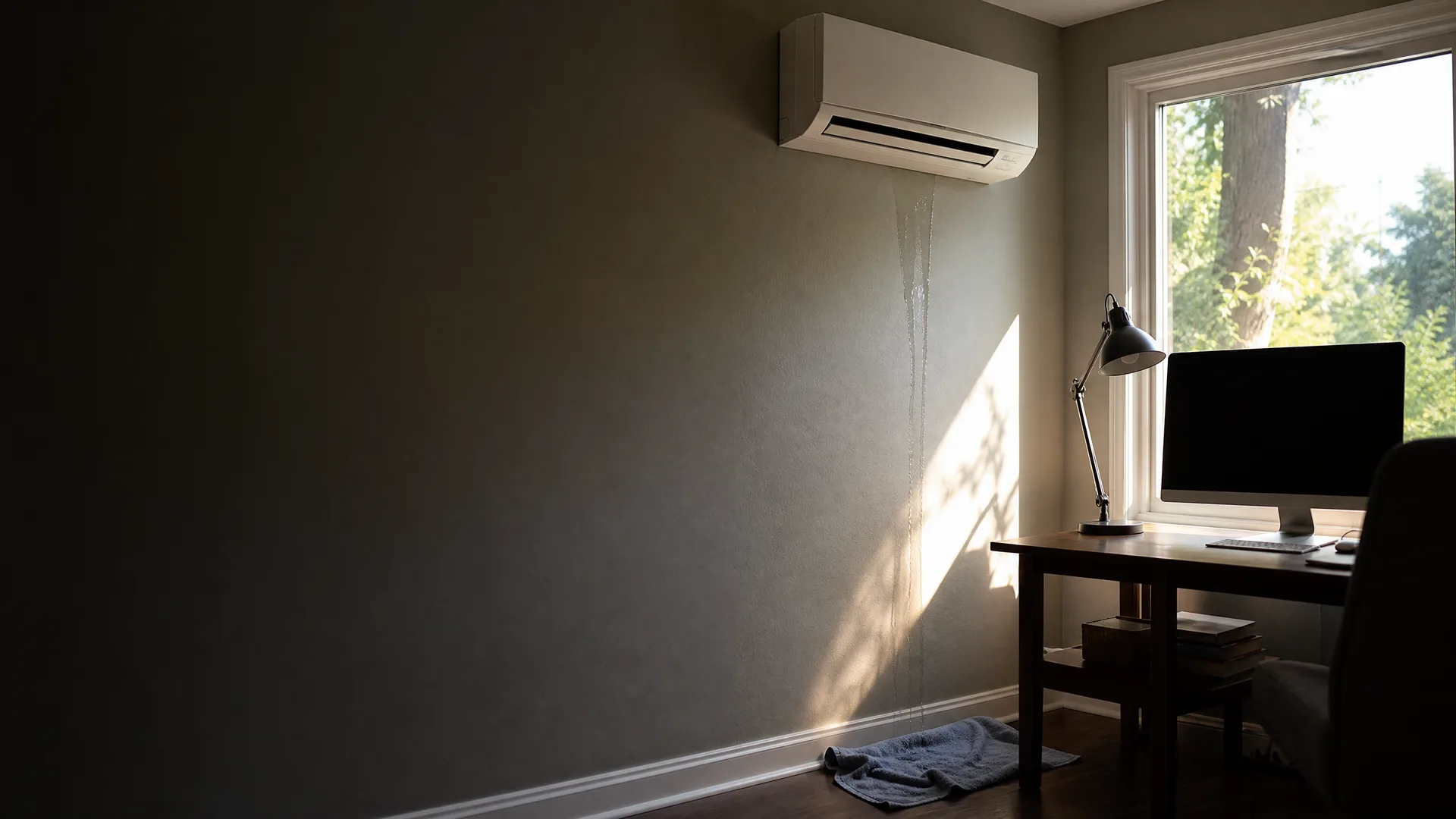
A wall-mounted mini-split air conditioner leaking water down a dim gray wall onto a towel on the floor, beside a window with a desk, lamp and monitor.

Wait, this image doesn't match what was asked. The scene described is a summer home office scene with a wet streak and a towel, but this page is about winter mini split noise in North Dakota. I need to write to the image as described.

A white wall-mounted mini-split air conditioner on a beige interior wall, with a window at left showing trees and a wooden fence, and dark wood flooring below.
A mini split that cycles on with a short click and settles into a steady hum is doing exactly what it should at ten below.
A white wall-mounted mini-split air conditioner indoor unit with dark louvered vents, installed near the ceiling on a beige wall below white crown molding.
Dust built up on the casing and a louder rattle at startup are signs this unit has been working harder than it should for a while.

Cold air is heavier for the blower to move, so it spins faster and the hum climbs in pitch. Below freezing, the outdoor unit runs a defrost cycle, briefly reversing to melt ice off the coil, and that's the whoosh or gurgle you hear partway through a cycle. Refrigerant itself contracts and expands as the compressor ramps up in the cold, and that's what causes a quick ticking or popping sound. The compressor works harder to pull heat out of freezing outdoor air than it does in warm weather, so its hum sits lower and heavier. Startup clicks come from somewhere simpler: the plastic housing and the metal lines both contract in extreme cold, and a few sharp clicks as they settle is normal. Wind is a separate thing entirely. At ten or twenty below, wind hitting the outdoor unit can add a rattle that has nothing to do with the mini split's parts. None of this is the unit struggling. It's the same system doing more work because the air outside is doing more to it.

What's actually happening inside the unit

  • Cold air is denser, so the blower works harder to push the same volume through the vents, which raises the pitch of the hum.
  • The outdoor unit runs a defrost cycle below freezing, reversing briefly to melt ice off the coil, and that reversal makes a whooshing or gurgling sound.
  • Refrigerant moving through the line set contracts and expands as the compressor ramps up in cold weather, which can cause a brief ticking or popping.
  • The compressor itself has to work harder to pull heat from freezing outdoor air, so its hum sits at a lower, heavier note than in warm weather.
  • Plastic housing and metal lines both contract in extreme cold, and that contraction is what causes a few sharp clicks right at startup.
  • Wind against the outdoor unit at ten or twenty below can add a rattle that has nothing to do with the mini split itself.
A woman in a gray turtleneck sweater stands by a window looking outside at snowy ground, with a dimly lit living room containing a sofa, shelves, lamp and a lit candle behind her.
A woman in a cream cable-knit turtleneck sweater stands in a warmly lit living room with a fireplace and shelves behind her, looking out a window toward snow-covered trees and a railed deck.
A woman in a cream knit turtleneck sweater stands by a window looking out at snow, with a lit fireplace, sofa and lamp in the room behind her.
A woman in a gray knit sweater sits by a window looking out at falling snow, with a dimly lit living room containing a sectional sofa, pillows, a lamp and houseplants behind her.

Matched to your mini split job

A new rattle or a hum that's gotten sharper doesn't always mean trouble, but it's not something to sit on either, not when it's the system keeping a North Dakota house warm through January. Gas heats most homes here, so for a lot of people the mini split is one unit doing one job, and if that job stops, there isn't a second system to fall back on. Checking it now, before the noise turns into the unit shutting down on the coldest night of the year, is the difference between a quick look and being without heat. You don't have to figure out whether it's the defrost cycle, a loose panel, or a motor wearing out. Send the request and a contractor who works on mini splits in this cold takes it from there. That's one less thing to track down yourself while the temperature's still dropping.

Why defrost makes it loud

The outdoor unit has to run a defrost cycle anytime ice builds up on the coil, and in North Dakota that can mean several times a day once it's below freezing. During defrost the system reverses briefly, and that reversal is what you hear as a whoosh or a short burst of fan noise before it settles back into heating. It's a normal part of running a heat pump in cold weather. The cycle itself usually runs a few minutes, then the unit goes back to its regular hum. If the outdoor unit sounds like it's working through defrost over and over without settling down, that's worth a closer look.

What a clean coil sounds like

A coil free of ice and dust lets air move through without resistance, so the blower doesn't have to strain to push the same volume of air into the room. That's part of why a well kept unit settles into a steady hum instead of staying loud. Frost that isn't clearing fully, or a coil that's picked up dust over a season of use, makes the fan work harder and louder to do the same job. You'll notice it most at startup, when the blower ramps up and the pitch climbs higher than it used to before it levels off.

A white wall-mounted mini-split air conditioner indoor unit with visible dust and staining along its lower vent, installed on a plain pale wall.
Before you get your mini split repair
A white wall-mounted mini-split indoor unit installed high on a gray interior wall, with a window at left and part of a light gray sofa with a dark cushion at lower right.
After you get your mini split repair

Running it alongside gas heat

Most houses here lean on gas through the winter and use the mini split for one room or one zone. That unit still cycles on and off all day even when the furnace is doing the main work, so you hear it more than you'd expect for something that isn't your primary heat. The noise isn't a sign it's straining to cover the whole house. It's just running its normal cycle more often because it's the first thing switching on when that one room drifts a degree or two cold. A unit working a smaller space should sound lighter doing it, not louder.

What cheap power changes and doesn't

Power is cheap here, so running a mini split longer or more often through the winter isn't the expense it is in other places, and that takes some pressure off worrying every sound means wasted money. It doesn't change what the sound is telling you about the equipment itself. A clicking that lingers past startup or a hum that's turned into a buzz points to wear or a part working harder than it should, regardless of what the electricity costs to run it. The price of power tells you nothing about the coil, the blower, or how clean that defrost cycle is running.

Power costs 11.82 cents per kilowatt-hour statewide

At eleven and a half cents a kilowatt-hour, running the mini split through a noisy defrost cycle or a harder-working blower isn't what's driving your bill up. If the noise is new, it's worth a look, but it's not costing you much to keep listening to it for now.

EIA-861 2025 statewide residential average

A bearded man in a blue and brown plaid flannel shirt stands indoors looking out a window at snow-covered trees, with a ceramic mug on the windowsill.
A man in a blue T-shirt sits on a light gray sofa, laughing while looking at an open laptop in the foreground, with a framed picture, lamp and potted plant behind him.
A single-story gray horizontal-siding house with multiple front-facing gables, white-trimmed windows, a dark front door, and a concrete walkway crossing a partly dry lawn under a clear blue sky.

That 53°F summer dew point means North Dakota air isn't heavy, so your mini split barely works for its cooling in June, July and August. Winter is a different story. The unit you hear clicking and humming in January is running against cold, dense air and ice on the outdoor coil, not the muggy air it was built to wring moisture from. It's doing most of its real work in the cold months, so the noises you notice now are the unit earning its keep, not the same job it does in summer. Figure from NOAA climate normals for North Dakota.

NASA POWER T2MDEW county cells weighted by homes

A mini split that clicks on, runs its defrost, and settles into a hum is just doing its job in a North Dakota winter. A new rattle, a hum turned buzz, or a clicking that won't quit is the system telling you something's worn or working harder than it should. You know the difference because you already caught it, and catching it early is what keeps a small fix small. The noise itself isn't costing you much with power this cheap, and gas carrying most of the load means this isn't your only heat. But a sound you can't explain is worth a straight answer from someone who can look at the unit, not a guess. Send in what you're hearing and when it happens, and the work of tracking down the right person is off your plate. You won't be the one calling around. Someone who knows these units in this cold takes it from here.

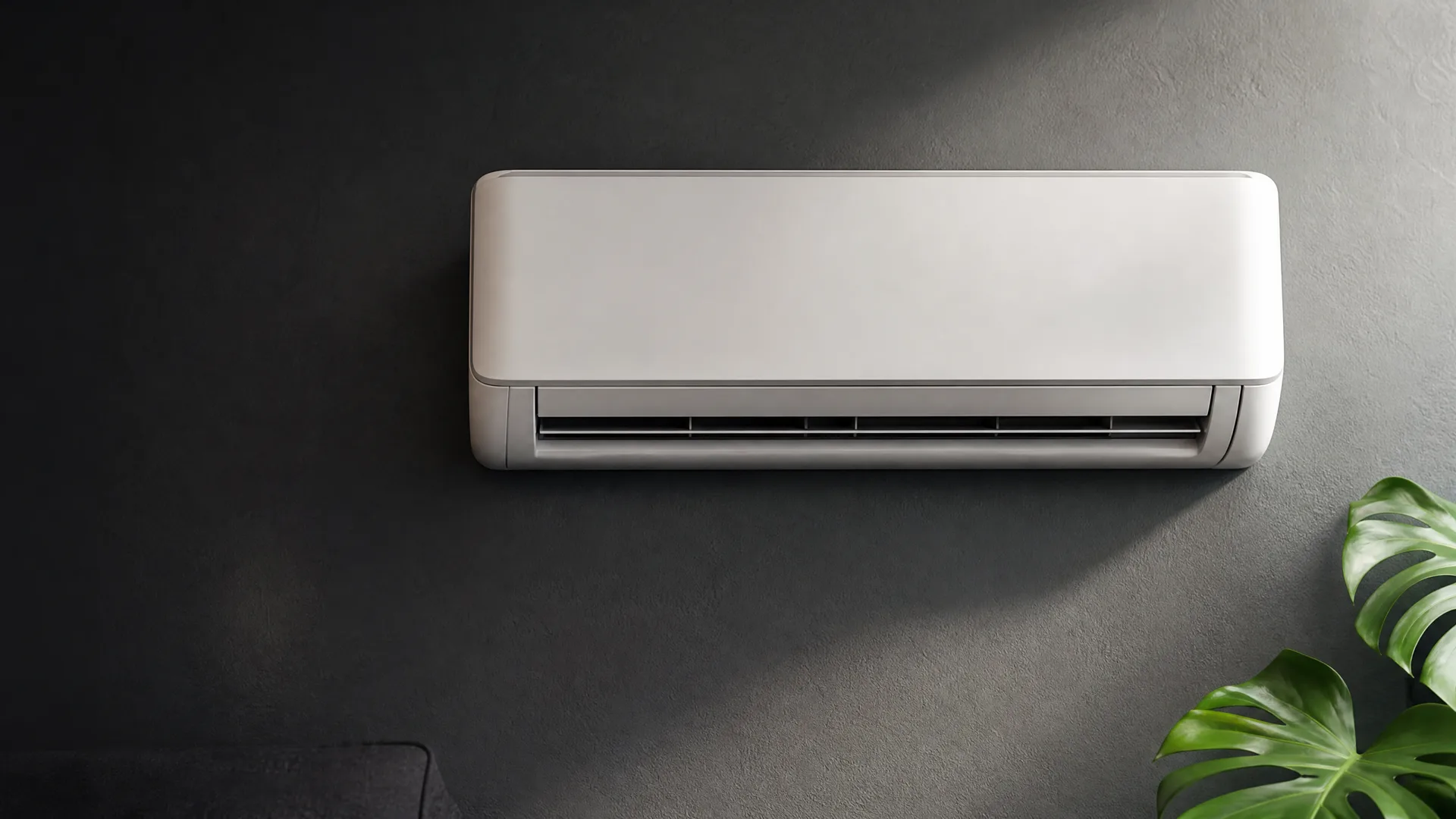
A white wall-mounted mini-split air conditioner on a dark grey textured wall, with a monstera plant leaf at the lower right corner.

A mini split pro near you

Step 1 of 3: Equipment