
Why your mini split won't turn on in a North Dakota winter
A mini split that won't turn on in a North Dakota winter is usually frozen up or locked out by its own safety controls. Once the outdoor temperature drops well below freezing, frost and ice can build up on the outdoor unit's coil faster than its defrost cycle can clear it. If ice covers the coil or blocks the fan, the system senses it can't run safely and shuts itself down rather than force the compressor against a blocked unit. Some units also have a low-temperature cutoff that keeps the compressor from starting at all below a certain outdoor temperature, which matters here since North Dakota winters routinely sit well below that line for weeks at a time. A tripped breaker or a control board reset after a cold snap can do the same thing. None of this means the unit is ruined. It means something is stopping it from starting, and that something needs to be found before it will run again.





A dead mini split means you're back on backup heat
If your mini split won't start, you're likely leaning harder on whatever backs it up, usually gas heat elsewhere in the house. Power is cheap here, so that's not what you'll notice. What you'll notice is the room the mini split covers going cold while the unit sits there with a blinking light or nothing at all. If that room is a converted garage, a sunporch, or an addition with no other heat source, it stops being an inconvenience and starts being a problem on a night when it's well below freezing outside.
You don't need to figure out whether it's the defrost board, a frozen coil, or a lockout code before you get help. That part is diagnosis, and it's not yours to do. What's yours right now is the hunt: finding a contractor who actually works on mini splits in your area, calling a few, explaining the same symptoms three or four times, then sorting through what each one quotes you. Send the form instead and that hunt is over. You're not the one tracking down who can come look at it anymore.

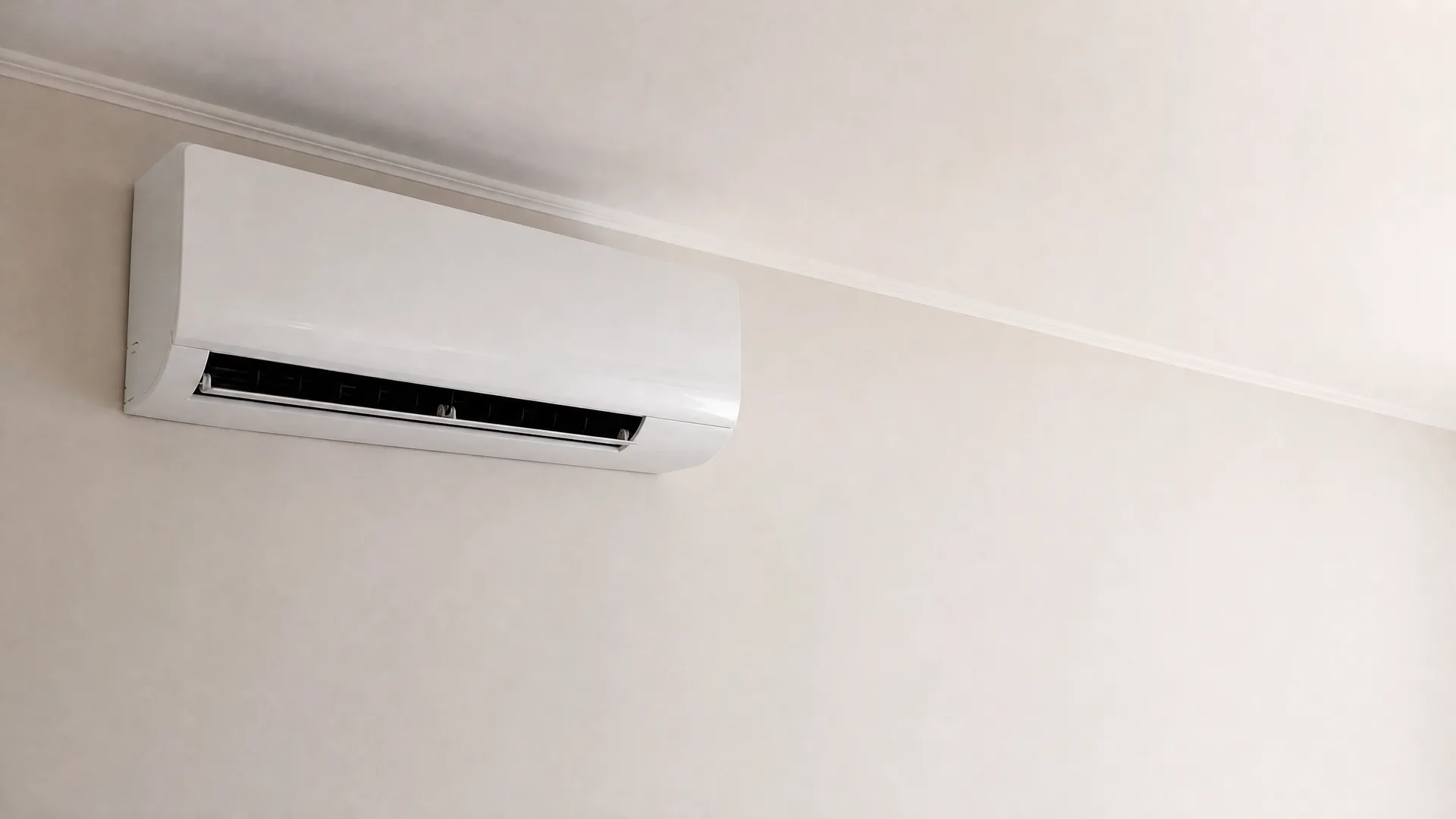
Why the outdoor unit locks out
Most mini splits stop compressors below a set outdoor temperature, often somewhere around minus 15 to minus 20 degrees, because the refrigerant can't carry heat efficiently in that kind of cold. The control board reads the temperature and shuts the compressor down to protect it rather than let it run poorly. That's not a failure. It's the unit doing what it was built to do once a North Dakota night gets that far below zero.
What a frozen coil looks like
Ice on the outdoor coil shows up as a solid white or gray crust, not a light frost. A healthy unit melts that off during a short defrost cycle, maybe ten minutes, a few times a day. If the coil stays iced over after hours of running, the defrost cycle isn't keeping up, or it isn't firing at all. That points to a stuck reversing valve or a sensor reading wrong, not something to chip off by hand.
Why does my mini split just blink lights at me instead of turning on?
Blinking lights instead of a running unit usually means the system is trying to tell you something specific. You're not dealing with a dead machine, you're dealing with one that's refusing to start on purpose. That's a different problem than no power at all, and it points to a smaller list of causes than you'd think.
The blinks are an error code, not a random glitch
Most mini splits flash the indoor unit's light in a pattern, a certain number of blinks, a pause, then the same pattern again. That pattern is a fault code the control board is reporting, the same way a check engine light works. In cold weather, the two most common codes point to a frozen outdoor coil or a pressure switch that's tripped from ice blocking airflow. The exact count means something different on every brand, Mitsubishi, Fujitsu, Daikin and LG each use their own sequence, so the number only means something once someone matches it to that unit's chart. Count the blinks and the pause between sets before calling anyone. That count is the fastest way to narrow down what's wrong.


Send one request and you're done looking

Describe what your mini split is doing once, in one form.
There's no charge for the request.
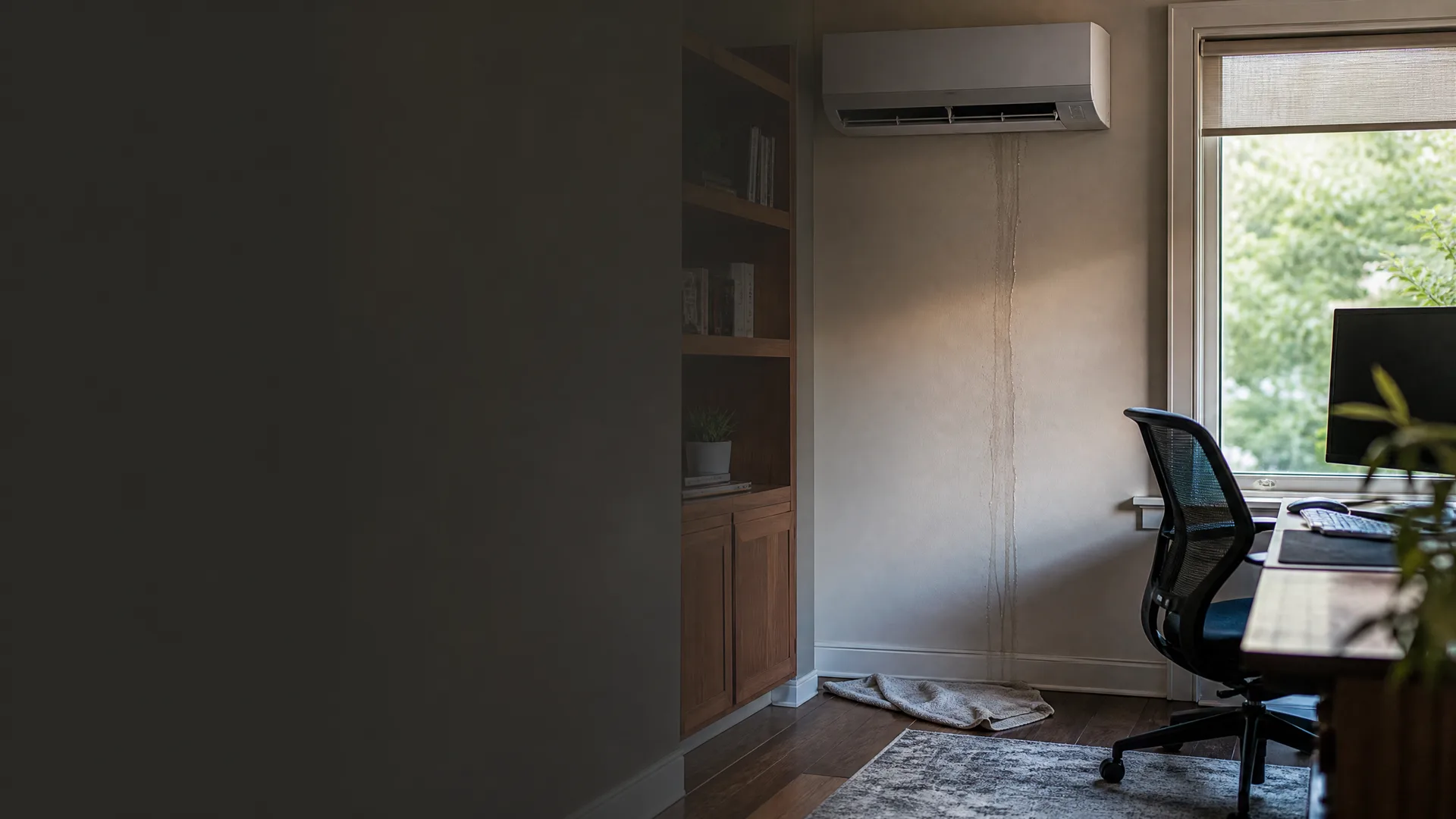
It's July, mid-afternoon, and you're at the desk in your home office, the mini split humming above the window. You glance up and see it, a dark streak running down the wall below the indoor unit, already reaching the baseboard. You grab the towel from the hall closet and press it against the wall, then look up at the unit itself. Water beads along the bottom edge and drops onto the carpet. Outside, it's warm the way North Dakota summers get, dry and easy, nothing like the heat other places deal with. None of that matters right now. You're on your knees with a towel, watching the wall, wondering how long this has been dripping before you noticed.
What are you noticing on the indoor unit right now
Look at the indoor head on the wall. The light might be blinking a pattern instead of staying solid, or it might show nothing at all even after you press the remote several times. If you check the outdoor unit, you may see ice built up over the coil or the fan, sometimes thick enough to stop the fan blade from turning freely. The remote might say it's on while the indoor unit stays quiet, no fan sound, no air moving. None of this means the unit is ruined. It means the system shut itself down on purpose, and left alone through more cold nights, that ice load on the outdoor coil only gets heavier.

Cold air across the outdoor coil forms frost once temperatures drop near freezing.
The control board schedules a defrost cycle and briefly reverses the system.
Heavy frost or a failed defrost sensor can delay or skip that cycle entirely.
Ice builds past what defrost can clear, and the board shuts the compressor down.
Power costs 11.82 cents per kilowatt-hour statewide
At 11.82 cents a kilowatt-hour, running the mini split itself was never going to be the expensive part. A locked-out unit doesn't raise your bill, it just leaves that room cold while the rest of the house carries the load.
EIA-861 2025 statewide residential average
Where this leaves you
- A mini split that won't start in a North Dakota winter is almost always frozen up or locked out, not broken.
- The outdoor unit's defrost cycle handles normal frost, but heavy ice or a failed sensor stops the system from restarting on its own.
- Below roughly minus 15 to minus 20 degrees, the control board shuts the compressor down because the refrigerant can't move heat efficiently.
- Blinking lights on the indoor head are the system telling you which safety control tripped, not a sign the unit is dead.
- Gas heat elsewhere in the house carries the load while the mini split is locked out, so the bill is not where you'll feel this.
- Sorting out frost buildup from a sensor failure means getting eyes on the outdoor coil, which is where a contractor's visit settles it.
A mini split that won't start on a cold morning is telling you something, not quitting on you. Frost on the outdoor coil, a defrost cycle that couldn't keep up, a sensor that failed partway through the cold snap. Any of those can lock the compressor out until someone clears the fault and checks what caused it. That's different from a unit that's actually broken, and it's why the blinking lights matter more than they seem to. You've already looked at the indoor head, checked the outdoor unit for ice, and noticed the rest of the house is holding steady on gas while this one room goes cold. What's left isn't a guess you can make from inside. It's eyes on that outdoor coil, hands on the control board, someone who can tell a frozen coil from a failed sensor by looking at it instead of waiting to see if it thaws out on its own. That's the part that doesn't happen by checking the unit again tomorrow morning. Finding who does that work is the part that usually eats the afternoon, calling around, explaining the blinking lights to three different people, waiting on quotes that don't tell you much until someone's actually looked at the unit. Send the form once and that part's off your plate. The room's still cold until someone gets there, but you're not the one tracking down who that someone is.





Finding a pro stops being your job
Fill out one short form instead of calling around.
You only hire the pro if you want to.